
Poor data diverts time and resources and creates considerable organizational risk. Whenever you embark on a compliance-related or strategically-focused project that requires clean data, it’s essential that you go through the process of data reconciliation. In this handy five-step guide to the issue, we’ll help you start on the best possible footing, with checklists for obtaining data, following overarching best practices, and remembering some key problem areas.
Informed decisions require good data—so what do you do if some details in your database are incomplete, inaccurate, or inconsistent? This checklist infographic offers an expedited look at the issue, helping you get the right stakeholders involved and ensuring that everyone is looking for the most common errors.
Keep scrolling to view the graphic, or download it here:
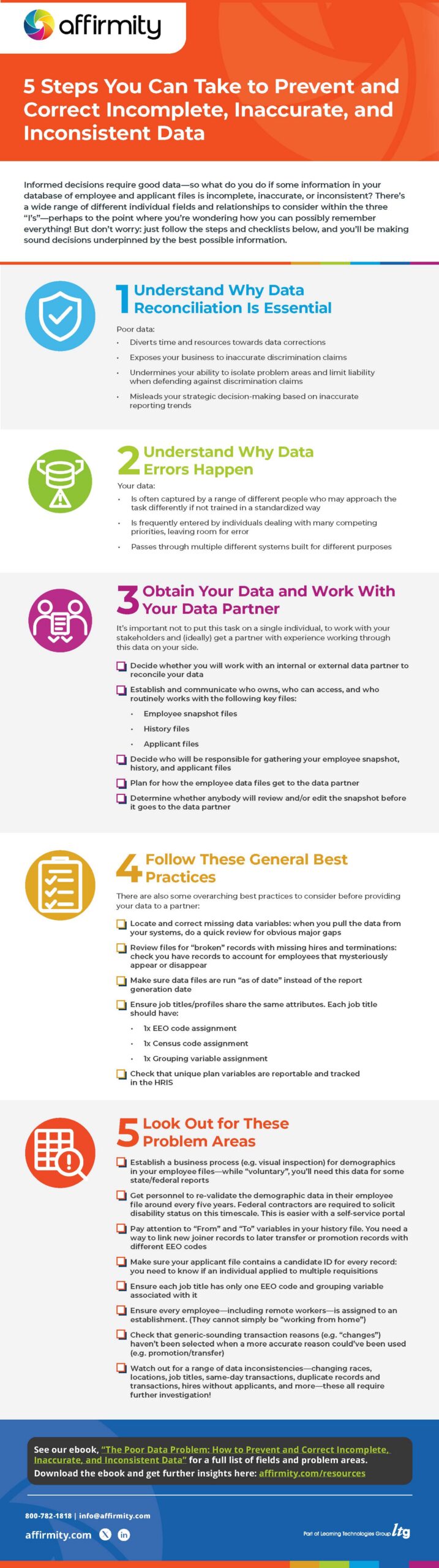
Click the button for a downloadable PDF version of this checklist.